Red Crowned Crane Bird: Elevating Your Embroidery with Precision and Grace
The Red Crowned Crane Bird is more than just a motif; it is a symbol of longevity, loyalty, and good fortune in many cultures. For textile artists and embroidery enthusiasts, capturing the elegance of this majestic creature presents both a creative opportunity and a technical challenge. When you decide to incorporate this design into your crafting projects, you are not merely adding an image to fabric; you are introducing a piece of art that demands respect for its intricate details. Whether you are stitching for personal enjoyment or creating products for a small business, understanding the nuances of this specific design can mean the difference between a mediocre result and a professional-grade finish.
Many crafters rush into downloading and stitching complex wildlife designs without fully evaluating the compatibility of the file with their specific machine or the suitability of the design for their chosen fabric. This haste often leads to frustration, wasted materials, and subpar results. By taking a moment to understand the technical requirements and aesthetic considerations of the Red Crowned Crane Bird machine embroidery design, you can avoid these common pitfalls and ensure your final product shines.
Understanding the Design Complexity
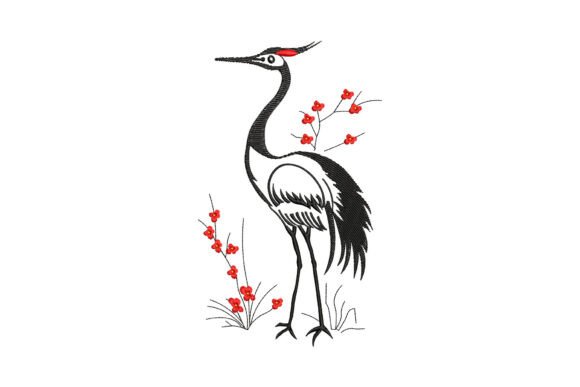
One of the most frequent misunderstandings among beginners is underestimating the stitch density required to render the fine details of a crane’s feathers and its distinctive red crown. A high-quality machine embroidery design must balance visual fidelity with stitch count. If the design is too dense, it can cause puckering on lightweight fabrics like cotton voile or silk. Conversely, if the stitch count is too low, the image may appear pixelated or lack definition, losing the graceful essence of the bird.
When evaluating a Red Crowned Crane Bird design, look for information regarding stitch count and dimensions. A well-engineered design will offer multiple sizes, allowing you to scale the image appropriately for different applications. For instance, a smaller version might be perfect for a pocket on a t-shirt, while a larger, more detailed iteration could serve as the centerpiece of a decorative wall hanging or tote bag. Always check if the design has been tested for scalability. Poorly digitized files often lose their integrity when resized, leading to gaps in coverage or overlapping stitches that can break needles.
Common Mistakes in File Selection and Compatibility
A critical error many creators make is assuming that one file format fits all machines. While modern embroidery software is quite versatile, native formats often yield the best results because they preserve the original programming instructions from the digitizer. The Red Crowned Crane Bird design typically comes in multiple embroidery file formats to accommodate various brands such as Brother, Janome, Bernina, and Husqvarna. Ignoring these options and attempting to convert files using unreliable third-party software can introduce errors in stitch order or tension settings.
- Ignoring Machine Hoop Limits: Always verify that the design dimensions fit within your machine’s maximum hoop size. Trying to stitch a design that is too large by re-hooping mid-project can lead to misalignment, ruining the symmetry of the crane’s wings.
- Overlooking Stabilizer Requirements: Wildlife designs with fine lines require stable backing. Using a cut-away stabilizer is often recommended for stretchy fabrics like jersey t-shirts to prevent distortion during washing.
- Neglecting Thread Quality: The subtle gradients in the crane’s plumage require high-quality rayon or polyester threads. Cheap threads may fray or break under the high stitch density, causing unsightly pauses and restarts in your work.
Fabric Choice and Application Errors
The substrate you choose plays a pivotal role in how the Red Crowned Crane Bird appears. A common mistake is stitching this detailed design on textured or loose-weave fabrics without proper stabilization. The intricate lines of the crane’s legs and beak can easily get lost in the texture of a rough linen or become distorted on a loosely knitted sweater. For beginners, it is advisable to start with tightly woven cotton or canvas. These materials provide a stable foundation that allows the stitches to lay flat and true.
For those looking to upgrade their crafting projects, consider the end use of the item. If you are creating tote bags, the design needs to withstand friction and weight. Ensure that the satin stitches used for the red crown are secure and not too long, as long satin stitches are prone to snagging. On t-shirts, placement is key. Stitching too close to the side seam or armhole can restrict movement and cause the fabric to pull, distorting the bird’s shape. Always measure and mark your placement carefully before hooping.
Maximizing Efficiency and Quality
To achieve the best results, treat the embroidery process as a partnership between your machine, the design, and your materials. Before committing to your final fabric, always stitch out a test sample on a similar scrap piece. This practice allows you to adjust tension settings and verify that the colors blend smoothly. The Red Crowned Crane Bird design relies on subtle color transitions to create depth. If your machine’s tension is too tight, the fabric may pucker; if too loose, the stitches may loop. A test run helps you dial in these settings without risking your main project.
Additionally, pay attention to the thread path indicated in the design files. Efficient digitizing minimizes jumps and trims, which reduces production time and thread waste. If you notice excessive jumping in your test stitch, it may indicate a poorly optimized file. High-quality designs are engineered to minimize these inefficiencies, ensuring a cleaner backside and faster completion times. This is particularly important for small business owners who need to maintain productivity while delivering high-quality goods.
Making the Right Choice for Your Project
When you are ready to download or purchase the Red Crowned Crane Bird machine embroidery design, look for providers who offer clear previews, detailed specifications, and customer support. A reputable source will provide information on recommended needle sizes, thread types, and stabilizers. They will also ensure that the files are virus-free and compatible with current software versions. Avoid free downloads from unverified sources, as these often contain corrupted files or poor digitizing that can damage your machine or ruin your fabric.
Remember that this design is versatile. It can be used for decorative fabric pieces, apparel, home decor, and even educational materials for teaching about wildlife conservation. By approaching the project with patience and attention to detail, you honor the beauty of the crane and elevate your crafting skills. Whether you are a hobbyist looking to personalize a gift or an entrepreneur building a brand, the right preparation ensures that your Red Crowned Crane Bird embroidery becomes a standout piece in your portfolio.
Ultimately, the goal is to create something that resonates with viewers and stands the test of time. By avoiding common technical mistakes and respecting the intricacies of the design, you transform a simple digital file into a tangible work of art. Take the time to learn, test, and refine your approach. The satisfaction of seeing the crane emerge perfectly from the fabric, with every feather defined and every curve smooth, is worth the effort. Upgrade your crafting projects with confidence, knowing that you have the knowledge to handle this beautiful design with the care it deserves.