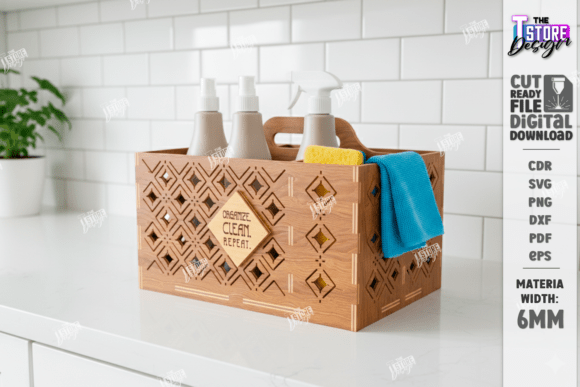
Cleaning Caddy Organizer Laser Cut CNC: A Practical Guide for Makers
The intersection of household utility and digital fabrication offers a unique opportunity for creators to produce functional items that enhance daily routines. One such project is the Cleaning Caddy Organizer Laser Cut CNC, a design intended for laser cutting machines that results in a wooden storage box for household cleaning tools. This article explores the practical aspects of this digital product, examining its utility, technical requirements, and suitability for various makers.
Understanding the Design and Utility
A cleaning caddy serves as a centralized carrier for essential supplies such as sprays, sponges, brushes, and cloths. The Cleaning Caddy Organizer Laser Cut Wooden Storage Box Household Cleaning Tools Carrier Decorative Utility Caddy Organize Clean Repeat CNC File is designed to be both functional and aesthetically pleasing. Unlike mass-produced plastic alternatives, a laser-cut wooden caddy offers a custom, artisanal look that can blend seamlessly with home decor.
The primary appeal of this design lies in its dual purpose. It acts as a utility carrier, allowing users to transport cleaning supplies from room to room efficiently, while also serving as a decorative piece when stored. The "Organize Clean Repeat" motif often associated with these designs reinforces the habit of maintaining an orderly space. For individuals who value organization and have access to fabrication tools, this project represents a tangible way to improve household management.
Technical Specifications and File Compatibility
This product is a digital asset, meaning the buyer receives files rather than a physical object. Understanding the technical components is crucial for a successful build. The download typically includes a zip archive containing multiple file formats to ensure compatibility with various software and hardware setups:
- SVG file: Scalable Vector Graphics, widely supported but prone to scaling issues in some programs.
- EPS file: Encapsulated PostScript, useful for older vector editing software.
- PDF file: Portable Document Format, often used for viewing dimensions and manual cutting guides.
- DXF file: Drawing Exchange Format, preferred for CAD-based workflows and specific laser software.
- PNG file: Raster image, primarily for preview or engraving reference.
A critical consideration for users is software compatibility. The design instructions specify that red lines indicate cut paths and black lines indicate engrave paths. This color-coding is standard in laser cutting workflows, allowing the machine to distinguish between through-cuts and surface markings. However, users must verify that their specific laser cutter and control software interpret these colors correctly.
Navigating Software Challenges
One notable technical detail involves the use of Lightburn, a popular laser control software. Users should be aware that Lightburn may sometimes distort the dimensions of SVG files. To mitigate this risk, it is advisable to use the DXF file format when working within Lightburn. DXF files tend to maintain dimensional accuracy more reliably in this environment, ensuring that the parts fit together precisely during assembly. If the provided formats do not match your workflow, reaching out to the creator for alternative file types or specific PNG sizes can prevent frustration before the cutting process begins.
Benefits of Laser-Cut Organization Solutions
Choosing to create a Cleaning Caddy Organizer Laser Cut CNC offers several advantages over purchasing pre-made organizers. First, material selection is entirely up to the maker. Plywood, MDF, bamboo, or hardwoods can be used, each offering different durability and aesthetic qualities. Second, the ability to customize finishes allows the caddy to match existing interior design schemes. A natural wood finish provides a warm, organic feel, while painted or stained options can add a pop of color.
Furthermore, the modular nature of laser-cut designs often means that repairs are straightforward. If a single component breaks, it can be re-cut and replaced without discarding the entire unit. This sustainability aspect appeals to environmentally conscious consumers who prefer repairable goods over disposable ones.
Tradeoffs and Considerations
While the benefits are clear, there are tradeoffs to consider. Laser-cut wood requires maintenance. Unlike plastic, wood can be susceptible to moisture damage, which is a relevant concern for a cleaning caddy that may hold wet sponges or leaky bottles. Users must apply appropriate sealants, such as polyurethane or varnish, to protect the wood from water and cleaning chemicals. Without proper sealing, the material may warp or degrade over time.
Assembly is another factor. These kits typically require glue and careful alignment. While the precision of CNC cutting ensures tight tolerances, the final structural integrity depends on the builder’s skill. Those unfamiliar with woodworking adhesives or clamping techniques may find the assembly process challenging. Additionally, the capacity of the caddy is fixed by the design. If a user requires storage for unusually large bottles or non-standard tools, this specific design may not accommodate their needs without modification.
Ideal Use Cases
This project is a strong fit for several scenarios. It is ideal for hobbyists with access to a laser cutter who wish to utilize scrap materials or create personalized gifts. It is also suitable for homeowners seeking a cohesive look for their cleaning supplies, particularly in open-plan living spaces where utility items are visible. Small business owners, such as professional cleaners or housekeepers, might also benefit from a durable, branded caddy that projects professionalism and organization.
Additionally, educators and workshop leaders can use this design to teach basic principles of digital fabrication, vector graphics, and assembly. The clear distinction between cut and engrave lines makes it an excellent instructional tool for beginners learning to operate laser machinery.
When to Consider Alternatives
Despite its merits, the Cleaning Caddy Organizer Laser Cut Wooden Storage Box may not be the best choice for everyone. Individuals without access to laser cutting equipment will need to outsource the cutting, which can increase costs and turnaround time. In such cases, purchasing a ready-made plastic or metal caddy may be more economical and convenient.
Moreover, those who prioritize extreme durability and water resistance might prefer injection-molded plastic or stainless steel options. These materials are inherently resistant to moisture and chemicals, requiring no additional maintenance or sealing. If the primary goal is purely functional storage in a high-moisture environment like a bathroom or laundry room, and aesthetic customization is less important, traditional materials may offer better long-term performance.
Making the Decision
Evaluating whether to pursue this project involves balancing effort, cost, and desired outcome. If you value customization, enjoy the process of making, and have the necessary tools, the Cleaning Caddy Organizer Laser Cut CNC is a rewarding project. It transforms a mundane household item into a piece of functional art. However, if convenience and zero-maintenance durability are higher priorities, off-the-shelf alternatives may better align with your goals.
Before downloading, ensure your machine’s bed size accommodates the design and that you have the appropriate wood thickness on hand. Reviewing the file types and understanding the specific recommendations for software like Lightburn will streamline the production process. By carefully considering these factors, you can determine if this digital product is the right solution for your organizational needs.
For further clarification on file formats or customization options, contacting the shop owner directly is recommended. Engaging with the creator can provide insights into potential modifications or troubleshooting tips that are not covered in the standard documentation. This proactive approach ensures a smoother experience from download to final assembly.