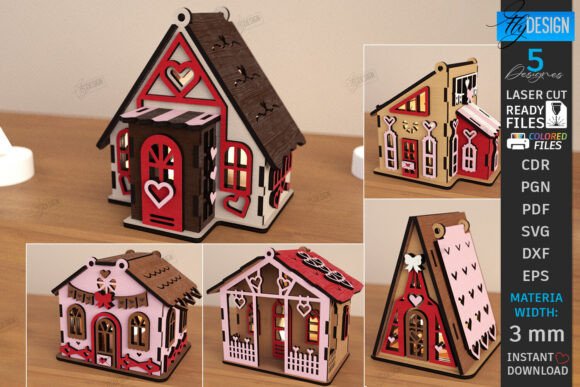
Valentine’s Day Candle House Laser Cut Guide
There is a distinct charm to handmade holiday decor that mass-produced items simply cannot replicate. As Valentine’s Day approaches, the demand for personalized, heartfelt gifts and home accents spikes. For makers, crafters, and small business owners, this season presents a prime opportunity to create something memorable. The Valentine’s Day Candle House Laser Cut design offers a perfect blend of simplicity and elegance, allowing you to produce professional-grade decorative pieces with minimal material waste and maximum visual impact.
This digital asset is not just a file; it is a toolkit for creativity. Whether you are a hobbyist looking to gift something unique to a loved one or an entrepreneur aiming to expand your seasonal product line, understanding how to leverage this design effectively can elevate your output. The concept is straightforward: a miniature house structure that houses a tealight, casting warm, intricate shadows when lit. However, the execution requires attention to detail, particularly regarding file formats and machine settings.
Why Choose Laser-Cut Mini Houses?
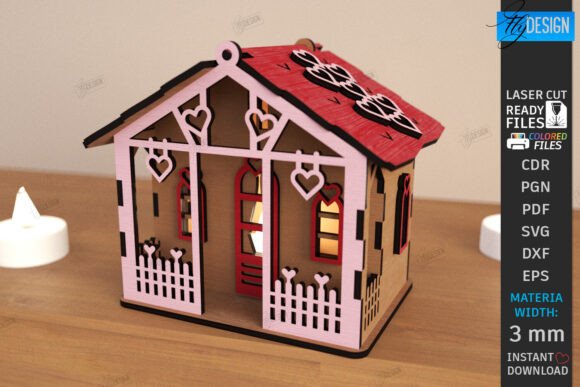
The appeal of the Valentine Candle House Laser Cut Decorative Mini Houses Tealight Holder lies in its versatility and emotional resonance. Unlike flat signs or two-dimensional ornaments, these structures offer depth and interactivity. When a candle is placed inside, the laser-cut details—often featuring hearts, arrows, or romantic phrases—project patterns onto surrounding walls, transforming a simple object into an atmospheric centerpiece.
From a production standpoint, these designs are highly efficient. They require relatively small sheets of material, such as plywood, acrylic, or cardstock, which keeps material costs low. This efficiency is crucial for maintaining healthy profit margins if you are selling these items. Furthermore, the assembly process is typically glue-free or requires minimal adhesive, making them quick to batch-produce. For educators or workshop leaders, these projects are excellent for teaching precision cutting and spatial reasoning, as they involve fitting tabs into slots to create a three-dimensional form.
Navigating File Formats for Precision
One of the most critical aspects of working with digital cut files is selecting the right format for your specific hardware and software ecosystem. This product includes a comprehensive zip archive containing SVG, EPS, PNG, PDF, and DXF files. While having multiple options is beneficial, knowing which one to use can save you hours of troubleshooting.
For users operating Lightburn, a popular laser control software, there is a known nuance regarding file imports. Lightburn can sometimes distort the dimensions of SVG files during the import process. This scaling issue can lead to parts that do not fit together correctly, resulting in wasted material and frustration. To mitigate this, it is strongly recommended to use the DXF file format when working within Lightburn. DXF files tend to retain their original dimensions more reliably, ensuring that your cuts are accurate and your assemblies fit seamlessly.
If you are using other software platforms like Adobe Illustrator, CorelDRAW, or Inkscape, the SVG or EPS files may serve you better due to their editable vector properties. These formats allow you to modify individual elements, resize components, or add custom text before sending the job to your laser cutter. Always verify the scale of your design on the screen before cutting, regardless of the file type chosen.
Understanding Cut and Engrave Lines
Successful laser cutting relies on clear communication between the designer’s intent and the machine’s actions. In this Valentine SVG Candle Holder design, the workflow is standardized for clarity:
- Red lines indicate where the laser should CUT through the material completely. These lines define the outer shape of the house and the internal slots for assembly.
- Black lines indicate where the laser should ENGRAVE. These are surface-level markings that add detail, texture, or decorative elements without cutting through the material.
Before running your full batch, always perform a test cut on a scrap piece of the same material. Laser power and speed settings vary significantly between machines and even between different batches of wood or acrylic. A test run ensures that your red lines cut cleanly without charring the edges excessively and that your black lines engrave with the desired contrast. Adjusting these settings proactively prevents costly mistakes and ensures a polished final product.
Creative Applications and Material Choices
The beauty of the Valentine’s Day Signs Holidays Decor category is its adaptability. While the traditional choice might be birch plywood for a rustic, natural look, experimenting with different materials can open up new market segments.
Acrylic offers a modern, sleek aesthetic. Using translucent or frosted acrylic can enhance the glow of the tealight, creating a soft, diffused light effect that is ideal for evening ambiance. Colored acrylics can also be layered to create vibrant, multi-tonal houses that stand out as bold decorative statements.
Cardstock or heavy paper is another viable option, particularly for those who do not have access to a laser cutter but wish to utilize the design with a die-cutting machine or even a sharp craft knife. Paper versions are lightweight and cost-effective, making them excellent for party favors, classroom projects, or large-scale event decorations where budget constraints are a factor.
For marketers and brand builders, these mini houses can serve as tangible touchpoints for customer engagement. Imagine including a small, laser-cut house in your Valentine’s Day packaging as a free gift. It adds perceived value to your primary product and leaves a lasting impression. Similarly, real estate agents or hospitality businesses might use these as welcoming gifts for clients visiting during February, adding a personal, festive touch to their service.
Commercial Viability and Customization
As a Valentine’s Day Gift Ideas CNC File, this design holds significant commercial potential. Consumers are increasingly seeking unique, non-generic gifts. A personalized candle house, perhaps with a couple’s initials engraved in the black line sections, transforms a standard decor item into a cherished keepsake.
When listing these products online, high-quality photography is essential. Capture the item both unlit and lit to showcase the difference in appearance. Highlight the precision of the cuts and the ease of assembly in your product descriptions. Emphasize that this is a digital product, meaning customers receive the files to create their own physical items, or clarify if you are selling the finished physical product made from these files.
If you are selling the digital files, ensure your licensing terms are clear. Are buyers allowed to sell physical items made from these files? Clarity here builds trust and avoids future disputes. For those purchasing the files for personal use, the ability to request different color sizes of PNG files or other file types adds a layer of customer service excellence. If you encounter compatibility issues or need specific adjustments, reaching out to the designer can often yield solutions that enhance your workflow.
Final Thoughts on Implementation
Integrating the Valentine s Day Candle House Laser Cut into your creative or business workflow requires a balance of technical precision and artistic vision. By selecting the appropriate file format, calibrating your machine correctly, and choosing materials that align with your aesthetic goals, you can produce high-quality items that resonate with your audience.
Remember, the value of this product extends beyond the cut itself. It is about the experience of creating, the joy of gifting, and the warmth of the light it emits. Whether you are a seasoned professional or a novice maker, taking the time to understand the nuances of laser cutting will pay dividends in the quality of your final output. Keep experimenting, keep refining your settings, and stay connected with the creator community to discover future releases and inspiration. Your next great project might just be a file away.