Mastering the Valentine’s Candle Column Holder Laser Design for Precision Craftsmanship
Integrating digital design assets into physical production requires more than just a capable machine; it demands a clear understanding of file compatibility, material behavior, and workflow efficiency. The Valentine’s Candle Column Holder Laser represents a specific niche within decorative crafting, blending romantic aesthetics with structural engineering. For creators, small business owners, and hobbyists, this asset is not merely a static image but a functional component in a broader manufacturing process. Understanding how to leverage this design effectively can transform a simple laser cutting session into a streamlined, profitable, or personally satisfying project.
Understanding the Asset and Its Role in Production
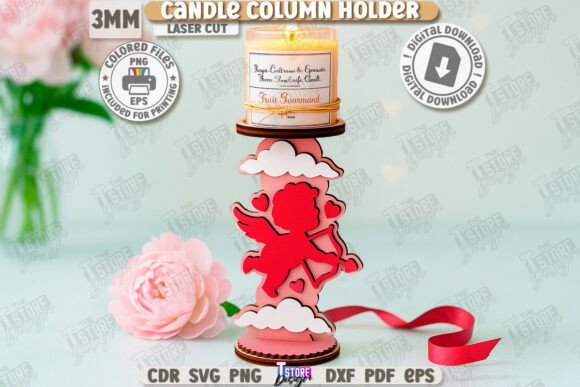
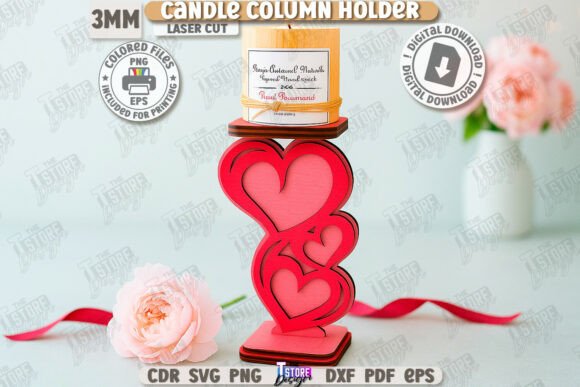
At its core, the Valentine’s Day Candle Column Holder with Heart Designs is a vector-based template designed for subtractive manufacturing. It features intricate laser-cut standing figurines and heart shapes that serve both decorative and structural purposes. When you acquire this digital product, you are purchasing a set of instructions for your machine, packaged in multiple formats to ensure broad compatibility. The inclusion of SVG, EPS, PNG, PDF, and DXF files indicates a thoughtful approach to cross-platform usability, catering to users of various software ecosystems such as Adobe Illustrator, CorelDRAW, LightBurn, and Inkscape.
The design’s utility lies in its dual function: it acts as a romantic design element for seasonal decor while serving as a practical holder for column candles. This duality means that the production process must balance aesthetic precision with structural integrity. A poorly cut joint can compromise the holder’s stability, while inconsistent engraving depth can diminish the visual impact of the heart motifs. Therefore, treating this file as a critical part of your production pipeline is essential for high-quality outcomes.
Pre-Production Preparation and File Compatibility
Successful implementation begins before the laser is even powered on. The first step in your workflow should be assessing file compatibility with your specific hardware and software combination. While SVG files are widely supported, they can sometimes cause dimensional distortions in certain environments, particularly within LightBurn. Experienced operators know that relying solely on SVGs can lead to scaling issues that result in parts that do not fit together correctly.
To mitigate this risk, it is advisable to use the DXF file format when working with LightBurn. DXF files tend to maintain stricter geometric fidelity, ensuring that the dimensions of the Valentine Laser Valentine’s Signs CNC File remain accurate from screen to material. This choice reflects a broader principle in digital fabrication: always select the file format that offers the highest precision for your specific toolchain. If you are using other software, test the EPS or PDF versions to determine which renders the cleanest vector paths without unnecessary nodes or broken lines.
Additionally, review the layer structure of the file. The design specifies that RED lines indicate CUT paths and BLACK lines indicate ENGRAVE paths. This color-coding is a standard industry practice that simplifies the setup process. However, it requires vigilance. Ensure your software correctly interprets these colors as distinct operations. Misinterpreting a cut line as an engrave line, or vice versa, can ruin the material and waste time. Organizing your workspace by verifying these settings before loading the material is a crucial quality control step.
Material Selection and Machine Setup
The Heart Shapes Decorative Column Candle Holder relies on precise joinery. Therefore, material selection is not arbitrary. Wood veneers, plywood, and acrylics are common choices, but each behaves differently under laser heat. Plywood, for instance, offers strength but may have varying glue layers that affect cut quality. Acrylic provides a sleek, modern look but requires different power and speed settings to achieve clean edges without melting.
When preparing your machine, consider the thickness of your material relative to the design’s slot widths. The Laser Cut Standing Figurines are designed with specific tolerances. If your material is thicker than specified, the pieces may not interlock securely. Conversely, if the material is too thin, the holder may wobble or fail to support the weight of a column candle. Conducting a test cut on a scrap piece of the same material is a non-negotiable step in professional workflows. This allows you to fine-tune power and speed settings, ensuring that the CNC File executes cleanly without charring or incomplete cuts.
Furthermore, secure your material properly. Warping or shifting during the cutting process can misalign the intricate heart designs, leading to assembly difficulties. Use pins, tape, or a honeycomb bed to keep the sheet flat and stable throughout the operation. This attention to detail ensures consistency, especially if you are producing multiple units for sale or gifting.
Execution and Assembly Workflow
Once the cutting and engraving processes are complete, the focus shifts to post-processing and assembly. The Valentine’s Candle Column Holder is designed for ease of assembly, but careful handling is required to preserve the delicate laser-cut edges. Remove any smoke residue or soot from the engraved areas using a soft cloth or mild cleaner, depending on the material. This step enhances the visual contrast between the cut edges and the engraved hearts, highlighting the Romantic Design elements.
Assembly should be approached methodically. Dry-fit the pieces before applying any adhesive. This allows you to verify that all joints align correctly and that the structure stands upright without leaning. If adjustments are needed, slight sanding of the tabs or slots may be necessary, though a well-calibrated laser cut should minimize this need. Once satisfied with the fit, apply a small amount of wood glue or acrylic cement to secure the joints. Clamping the structure while the adhesive sets ensures a strong bond and a professional finish.
For those integrating this product into a larger business workflow, consider batching your production. Cut multiple sheets at once if your machine bed allows, optimizing machine uptime and reducing per-unit labor costs. Organize your finished parts systematically to streamline the assembly line. This approach maximizes efficiency and allows you to scale production during peak demand periods, such as leading up to Valentine’s Day.
Troubleshooting and Optimization
Even with careful planning, issues can arise. If you encounter distorted dimensions, revisit your file format choice. As noted, switching from SVG to DXF often resolves scaling discrepancies in LightBurn. If engraving depth is inconsistent, check your lens focus and clean your optics. Dirty lenses can scatter the laser beam, resulting in faint or uneven marks.
If you require modifications to the design, such as different sizes or color variations for the PNG previews, reach out to the creator. The availability of customizable options suggests a flexible approach to customer needs. Asking for specific file types or adjustments can save you time spent manually editing vectors, allowing you to focus on production rather than design correction.
Long-Term Value and Integration
Incorporating the Valentine’s Candle Column Holder Laser design into your repertoire offers long-term value. It serves as a reliable asset for seasonal collections, enabling you to offer themed products without starting from scratch each year. By mastering the workflow associated with this file—from format selection to material optimization—you build a repeatable process that can be applied to other projects.
Follow the creator’s shop to stay updated on future releases. Expanding your library of high-quality, tested designs reduces the time spent searching for viable assets and increases your capacity for creative output. Whether you are a freelancer fulfilling client orders, a small business owner stocking inventory, or a hobbyist creating personalized gifts, this structured approach to digital fabrication ensures consistent, high-quality results. Embrace the precision of laser cutting, respect the nuances of file compatibility, and let efficient workflows drive your creative success.