Evaluating the Rose Flower Line Art Heart for Modern Embroidery Projects
In the evolving landscape of digital embroidery, the balance between aesthetic appeal and technical execution is paramount. Designers and hobbyists alike are constantly seeking assets that offer visual sophistication without compromising stitch quality. The Rose Flower Line Art Heart emerges as a notable candidate in this category, merging classic botanical motifs with contemporary linear styling. This design is not merely a decorative element; it represents a strategic choice for creators aiming to produce high-quality, emotionally resonant textiles.
For professionals managing small business inventories or independent creators crafting bespoke gifts, understanding the nuances of such a design is essential. It is not enough to simply download a file; one must evaluate how the digitization translates to fabric, how versatile the application is, and whether it aligns with current market trends. This analysis explores the practical value, technical characteristics, and ideal use cases for the Rose Flower Line Art Heart, providing a clear perspective on its utility in professional and personal workflows.
Design Aesthetics and Visual Appeal
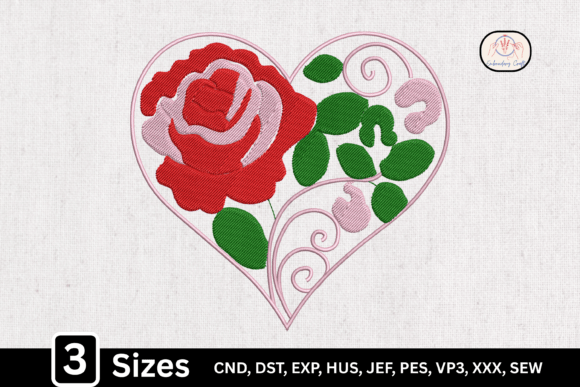
The core strength of the Rose Flower Line Art Heart lies in its hybrid visual language. Traditional rose embroidery often relies on dense satin stitches or complex fill patterns to mimic the depth of petals. While effective, these methods can sometimes appear heavy or dated. In contrast, this design utilizes swirling line-art curves to frame a detailed rose within a graceful heart shape. This approach creates a sense of movement and airiness, allowing the negative space to play an active role in the composition.
The integration of the heart shape provides immediate semantic clarity, signaling themes of love, romance, and connection. However, the execution avoids cliché by employing modern decorative outlines rather than solid, blocky shapes. This subtlety makes the design suitable for a broader demographic, including those who prefer minimalist or chic home décor over overtly sentimental imagery. The result is a piece that feels both timeless and current, capable of elevating simple fabrics into statement pieces.
Technical Digitization and Stitch Quality
A beautiful preview image does not guarantee a successful embroidery outcome. The true value of any digital asset is determined by its underlying digitization. The Rose Flower Line Art Heart is engineered for crisp satin outlines and smooth fill stitching, two critical components for professional results. Satin columns, when digitized correctly, provide a glossy, raised texture that catches light beautifully, adding dimension to the linear elements. Meanwhile, smooth fills ensure that the rose itself retains detail without becoming bulky or prone to thread breaks.
Consistency is another key factor. Poorly digitized designs often suffer from pull compensation issues, where the fabric puckers around dense areas. This design appears to account for fabric tension, distributing stitch density evenly to maintain structural integrity. For users operating standard home embroidery machines or commercial multi-needle units, this reliability reduces waste and minimizes the need for extensive testing. The ability to achieve stunning results on most embroidery machines suggests a high level of optimization in the file’s construction.
Versatility Across Applications
One of the most compelling aspects of this design is its adaptability. Unlike highly specific motifs that may only suit a single product type, the Rose Flower Line Art Heart functions effectively across various mediums. Its balanced scale and refined lines make it suitable for both large-scale and small-format applications.
- Apparel and Fashion: The design works exceptionally well on denim jackets, linen shirts, or cotton tote bags. The line-art style complements casual fabrics without overwhelming them, offering a touch of elegance to everyday wear.
- Home Décor: When applied to throw pillows, table runners, or wall hangings, the romantic theme enhances interior spaces. The swirling curves add a dynamic visual interest that static prints often lack.
- Gift Items: For Valentine’s Day, anniversaries, or weddings, this design serves as a thoughtful centerpiece. It can be embroidered on handkerchiefs, pouches, or framed textile art, providing a personalized touch that mass-produced items cannot replicate.
This flexibility allows creators to maximize their return on investment. A single design file can generate multiple product lines, reducing the time spent sourcing new assets and enabling a more cohesive brand aesthetic.
Target Audience and Ideal Use Cases
Who benefits most from incorporating the Rose Flower Line Art Heart into their workflow? The answer spans several professional and recreational categories.
Small Business Owners and Entrepreneurs: For those running Etsy shops or local boutiques, trending designs are crucial for sales. The combination of roses and hearts is perennially popular, but the modern line-art twist helps differentiate products from saturated markets. It appeals to customers seeking unique, handcrafted quality.
Wedding and Event Planners: Custom embroidery is increasingly popular for bridal parties and reception décor. This design’s elegant profile fits seamlessly into wedding themes, from rustic chic to modern minimalist. It can be used on ring bearer pillows, guest book covers, or favors.
Educators and Workshop Leaders: Teaching embroidery requires designs that are forgiving yet impressive. The clear outlines and structured fills of this pattern make it an excellent teaching tool for intermediate students learning to manage complex curves and color transitions.
Practical Considerations and Limitations
While the Rose Flower Line Art Heart offers significant advantages, it is important to approach its use with realistic expectations. No design is universally perfect for every scenario. Users should consider the following factors to ensure optimal outcomes.
First, fabric selection matters. While the design is optimized for stability, extremely stretchy or sheer fabrics may require additional stabilizers to prevent distortion. The satin outlines, while crisp, rely on proper tension settings. Testing on scrap fabric before committing to final projects is always recommended.
Second, size scalability has limits. Although vector-based graphics can be resized infinitely, embroidery files are fixed. Enlarging the design significantly may reveal stitch gaps, while shrinking it too much could cause threads to merge, losing the delicate line-art detail. It is advisable to adhere to the recommended size ranges provided by the digitizer to maintain clarity.
Finally, thread choice influences the final appearance. High-sheen rayon or polyester threads enhance the satin stitches, making the lines pop. Matte cotton threads may soften the look, which could be desirable for rustic projects but might reduce the visual impact of the intricate curves. Experimentation with thread types is part of the creative process.
Long-Term Value and Workflow Integration
Investing in high-quality digital embroidery designs is a long-term strategy. Unlike physical supplies that deplete, a well-digitized file like the Rose Flower Line Art Heart can be used repeatedly without degradation. Its timeless theme ensures it remains relevant beyond seasonal trends, providing consistent value over years of use.
Integrating this design into a professional workflow also streamlines production. Because it is pre-digitized for smooth performance, it reduces the time spent on editing or troubleshooting stitch paths. This efficiency allows creators to focus on other aspects of their business, such as marketing, customer service, or developing new product lines.
Moreover, the design’s aesthetic versatility supports brand consistency. Whether used for a spring collection or a holiday promotion, the elegant style maintains a cohesive look across diverse product offerings. This consistency helps build brand recognition and customer trust.
Final Thoughts on Utility and Execution
The Rose Flower Line Art Heart stands out as a well-executed resource for anyone involved in textile creation. It successfully bridges the gap between traditional floral symbolism and modern design sensibilities. By prioritizing clean digitization and versatile application, it offers practical solutions for a wide range of projects.
For professionals, it represents a reliable asset that minimizes technical risk while maximizing visual appeal. For hobbyists, it provides an accessible yet sophisticated option for personal projects. Understanding its strengths and limitations allows users to leverage its full potential, ensuring that each stitched piece reflects both skill and intention. In a market flooded with generic designs, this piece offers a refined alternative that respects both the craft and the end user.